


A cat-back exhaust can be one of the most satisfying changes you make to a performance car. It can sharpen the soundtrack, improve the appearance of the rear end and replace ageing factory pipework without taking you straight into downpipe, catalyst or engine-management territory. The difficult part is choosing the right system.
Two products described as cat-back exhausts may include different sections, and the same car can require a different kit depending on its model year, body style, factory valve arrangement or petrol particulate filter. This guide explains what you are actually buying, how resonated and non-resonated systems differ, and the checks that matter before you order.
What is a cat-back exhaust system?
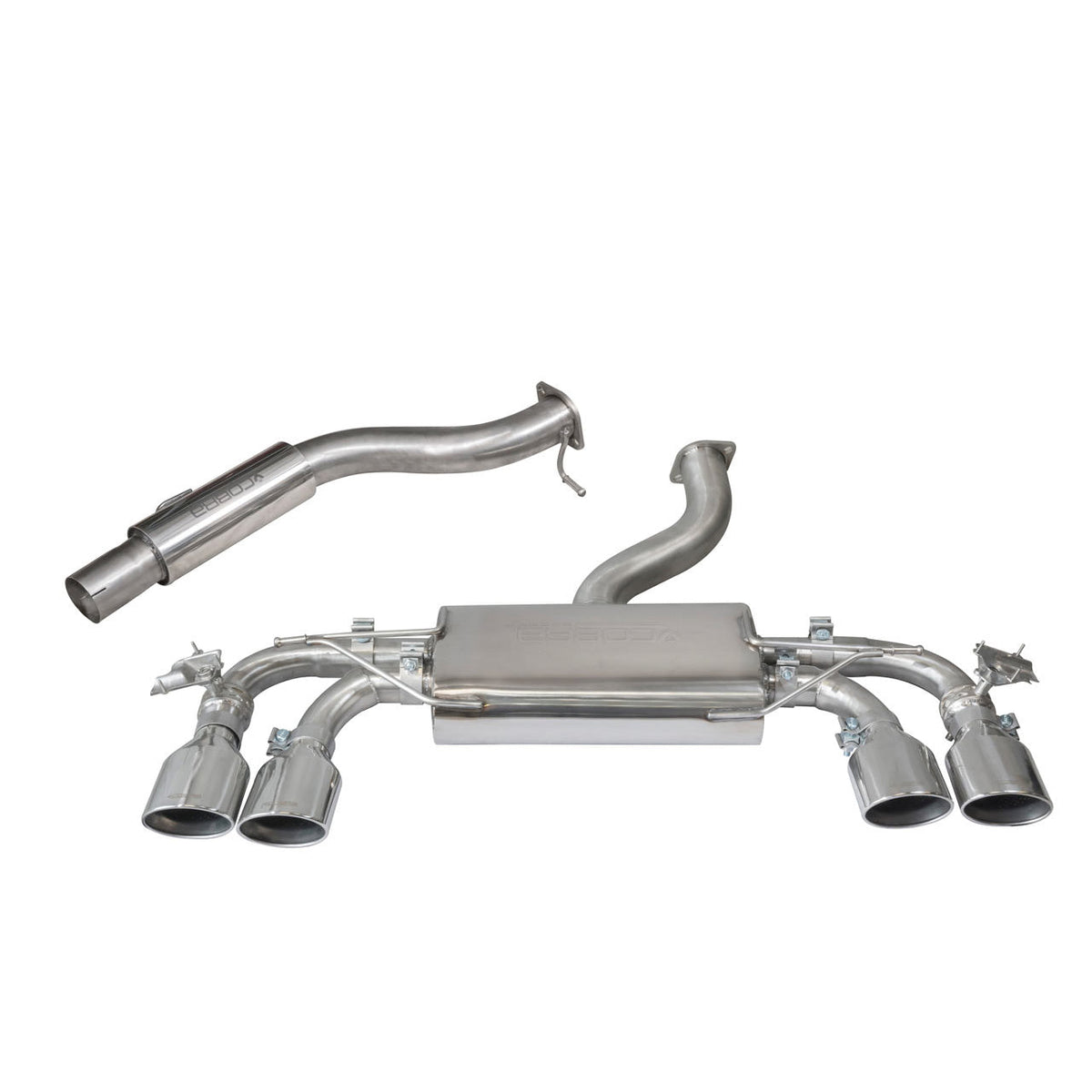
A cat-back exhaust system replaces the exhaust pipework behind the catalytic converter. On many modern petrol cars, that means the centre section, rear silencer and tailpipes. However, the name is a useful category rather than a universal bill of materials. The exact connection point and included parts vary between vehicles and manufacturers.
Cars fitted with a gasoline particulate filter, also called a GPF, PPF or OPF, add another complication. Some kits connect behind that filter and are described as GPF-back systems. Others have a different layout or require a separate front section. Read the individual product contents rather than assuming every item in a cat-back category is a complete, one-box solution.
You can browse the current cat-back exhaust systems at Nineteen72 Performance, but always confirm the exact application and supplied components before ordering.
Cat-back vs axle-back vs turbo-back exhausts
The three terms describe how much of the original system is being replaced.
| System type | Typical sections replaced | Main considerations |
|---|---|---|
| Axle-back | Rear silencer and tailpipe section | Usually the simplest route to a different sound and appearance, but the name and break point vary by car. |
| Cat-back or GPF-back | Pipework behind the catalyst or particulate filter, often including centre and rear sections | More scope to alter tone and flow. Check resonator, valve, GPF and connection details carefully. |
| Turbo-back | System from the turbocharger rearwards, potentially including downpipe and catalyst sections | Much greater emissions, calibration and road-legality implications. This is not interchangeable with a conventional cat-back purchase. |
An axle-back can make sense when you want a modest change and the factory centre section is in good condition. A cat-back normally offers more control over the final sound because the centre pipe and resonator arrangement can also change. A turbo-back is a different level of modification and should be planned around the exact hardware, calibration and intended use of the car.
Resonated or non-resonated: which should you choose?
Resonated systems
A resonated system includes an additional silencer or resonator in the exhaust path. Its job is to reduce selected sound frequencies, not simply to make everything silent. For a daily-driven car, especially one that spends time at a steady motorway speed, this is often the safest starting point. You still gain a more purposeful tone, but the risk of an intrusive cabin boom is usually lower.
Non-resonated systems
A non-resonated system removes that centre silencing element. It will generally be louder and more immediate, with more volume under load and often more presence on a cold start. That can suit a weekend or track-focused build, but louder is not automatically better. Gear ratio, engine load, body style and the remaining factory exhaust components all influence drone.
Cobra Sport describes its non-resonated systems as the louder option because they omit the centre box, while a resonated layout uses a chamber to cancel selected frequencies. That is a helpful principle, but it does not tell you exactly how a particular car will sound. Listen to recordings of the same engine, body style, filter configuration and system wherever possible.
Valved systems
A valved exhaust changes the gas path through the rear silencer, allowing different sound levels depending on the valve position. It can give a car more range between a restrained cruise and a stronger open-valve sound. Check whether the kit retains the factory valve motor, supplies its own controller, or changes how the original system operates. A valve does not make an otherwise unsuitable exhaust automatically road legal.

Why GPF and PPF fitment matters
A petrol particulate filter changes the factory exhaust layout and usually changes the compatible link pipe or front section. Two cars that look identical can require different systems because one was built with a GPF and the other was not. Registration year alone is not always enough, particularly around a model-year or emissions change.
The Volkswagen Golf Mk7.5 GTI is a useful example. Nineteen72 lists separate Remus Golf GTI systems for cars with GPF or PPF and versions for cars without GPF or PPF. Cobra Sport also lists a Golf GTI Mk7.5 cat-back with its own application notes and option structure.
Before ordering, check the VIN, build date, engine code and the physical layout under the car. If there is any doubt, send those details to Nineteen72 Performance rather than choosing on the basis of a registration year alone.
Will a cat-back exhaust add power?
A freer-flowing exhaust can reduce restriction, but there is no credible universal power figure for every cat-back system. Results depend on the engine, turbocharger, factory pipe diameter, catalyst and filter layout, the replacement system and any supporting calibration.
On many standard road cars, the most noticeable changes are sound, response and appearance rather than a dramatic peak-power increase. Treat any quoted gain as product-specific. Look for testing on the same vehicle and configuration, and do not apply a result from a non-GPF car to a GPF-equipped version.
A conventional cat-back that retains the original emissions equipment and sensors will not normally require a remap simply to operate. That changes if the project extends into downpipes, catalysts, particulate filters or sensor locations.
How to choose a cat-back for road, fast-road or track use
Daily road car
Prioritise a resonated system or a properly integrated valved option. Consider cold-start volume, motorway cruising, neighbours and passengers as well as the full-throttle sound. A slightly quieter system that you enjoy every day is a better purchase than one you avoid using.
Fast-road car
A resonated or non-resonated system can work, depending on the engine and your tolerance for volume. Spend time checking sound clips from inside the cabin, not only external revving videos. Confirm that the chosen system retains the equipment required for your road use.
Track-focused car
Do not assume a louder exhaust is suitable for every circuit. Track-day organisers commonly apply static and drive-by noise limits, and the limits differ between venues and event days. A valved system may offer useful flexibility, but the car still has to meet the organiser's test conditions. Check the event rules before committing to the loudest configuration.
Fitment checklist before you buy
- Identify the exact vehicle. Record the chassis, engine, body style, drivetrain, build date and model year.
- Confirm GPF or PPF status. Do not infer this from the badge alone.
- Check the factory valve arrangement. Confirm whether the new system retains, replaces or deletes the original valve function.
- Read the supplied-parts list. Some listings are a rear section, connection tube or component needed to complete a larger system.
- Choose the sound configuration. Compare resonated, non-resonated and valved options for your real use.
- Check tailpipe and valance compatibility. Tip size and shape must suit the bumper opening or diffuser.
- Allow for installation parts. Clamps, gaskets, adapters, mounts and fresh hardware may be required.
- Check insurance and road requirements. Declare modifications and make sure the chosen configuration is appropriate for how the car will be used.
The Remus BMW M140i F20 and F21 cat-back illustrates why option checking matters. The live product offers resonated and non-resonated front-section choices plus different tailpipes. For the Cobra Sport Golf R Mk7.5 cat-back, the resonator, valve and tailpipe selections create several materially different configurations.

UK road and MOT considerations
Road suitability is about more than whether the parts physically fit. The DVSA MOT inspection manual, updated on 14 October 2026, says exhaust noise must not be unreasonably above the level expected from a similar vehicle with a standard silencer. Excessive noise is a major defect. The same manual treats manufacturer-fitted emissions-control equipment that is missing, obviously modified or obviously defective as a major defect on applicable vehicles.
The Vehicle Certification Agency's noise guidance also states that it is illegal to modify a vehicle's exhaust so that it is noisier than the level recorded for that model at type approval. A product being described as cat-back, valved or direct-fit does not override those requirements.
For a road car, retain the required emissions equipment, choose the sound level responsibly and inform your insurer. If a product is described as race use only, box-delete or without homologation, treat that wording seriously.
Installation and aftercare
A quality system still needs careful installation. The exhaust should sit without stressing the joints, touching the body or loading the rubber mounts. Tailpipes need even clearance from the bumper, while valves and wiring must be positioned away from heat and moving parts. After the first heat cycles, inspect the clamps, connections and clearances again in line with the manufacturer's instructions.
Clean visible stainless or coated tips with a suitable non-abrasive product. Check mounts and rubbers during routine servicing, and investigate any new rattle, leak or change in valve operation before it becomes a larger problem.
Frequently asked questions
Does a cat-back exhaust need a remap?
Usually not when it fits behind the original emissions equipment and does not disturb sensors. A downpipe, catalyst, GPF or sensor change is a different situation and may require further hardware and calibration planning.
Will a cat-back exhaust pass an MOT?
The name alone does not guarantee a pass. The system must be secure, free from relevant leaks, within acceptable noise levels and must not leave required emissions-control equipment missing or obviously modified.
Is non-resonated always better for performance?
No. Removing a resonator mainly changes sound. Any power difference is vehicle and system specific, while the increase in cabin volume can be substantial.
Can a cat-back exhaust remove the GPF?
Some terminology is used inconsistently, so inspect the actual parts and connection points. For a road car, do not assume a kit that deletes or alters emissions equipment is acceptable simply because it is marketed as cat-back.
What information should I send for a fitment check?
Send the registration or VIN, build date, exact model and engine, body style, whether the car has a GPF or PPF, and details of any existing exhaust modifications. Include the product link and the sound or tailpipe option you are considering.
Choose the system around the car you actually use
The best cat-back exhaust is not necessarily the loudest or the one with the largest tailpipes. It is the system that fits the exact vehicle, retains the functions you need and delivers a sound you will enjoy on every journey.
Explore the Nineteen72 Performance cat-back exhaust collection, or contact the team with your vehicle and configuration details for a fitment check before ordering.


